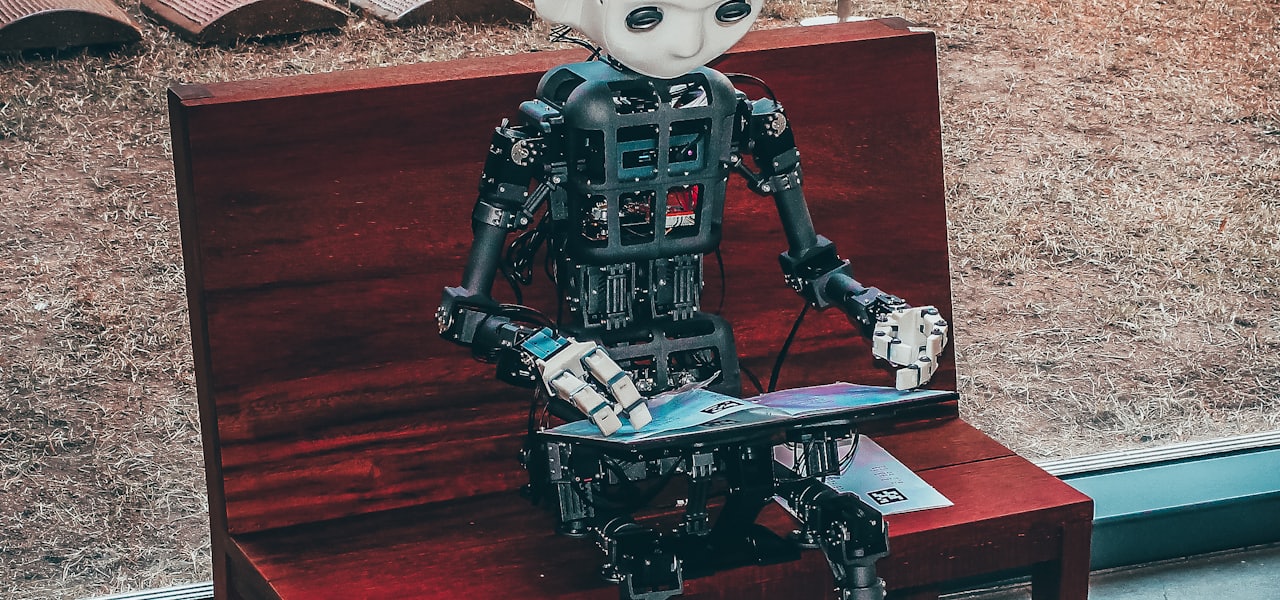
Lexical substitution is the task of identifying a substitute for a word in the context of a clause. For instance, given the following text: "After the match, replace any remaining fluid deficit to prevent chronic dehydration throughout the tournament", a substitute of game might be given. Lexical substitution is strictly related to word sense disambiguation (WSD), in that both aim to determine the meaning of a word. However, while WSD consists of automatically assigning the appropriate sense from a fixed sense inventory, lexical substitution does not impose any constraint on which substitute to choose as the best representative for the word in context. By not prescribing the inventory, lexical substitution overcomes the issue of the granularity of sense distinctions and provides a level playing field for automatic systems that automatically acquire word senses (a task referred to as Word Sense Induction). == Evaluation == In order to evaluate automatic systems on lexical substitution, a task was organized at the Semeval-2007 evaluation competition held in Prague in 2007. A Semeval-2010 task on cross-lingual lexical substitution has also taken place. == Skip-gram model == The skip-gram model takes words with similar meanings into a vector space (collection of objects that can be added together and multiplied by numbers) that are found close to each other in N-dimensions (list of items). A variety of neural networks (computer system modeled after a human brain) are formed together as a result of the vectors and networks that are related together. This all occurs in the dimensions of the vocabulary that has been generated in a network. The model has been used in lexical substitution automation and prediction algorithms. One such algorithm developed by Oren Melamud, Omer Levy, and Ido Dagan uses the skip-gram model to find a vector for each word and its synonyms. Then, it calculates the cosine distance between vectors to determine which words will be the best substitutes. === Example === In a sentence like "The dog walked at a quick pace" each word has a specific vector in relation to the other. The vector for "The" would be [1,0,0,0,0,0,0] because the 1 is the word vocabulary and the 0s are the words surrounding that vocabulary, which create a vector.
Motor theory of speech perception
The motor theory of speech perception is the hypothesis that people perceive spoken words by identifying the vocal tract gestures with which they are pronounced rather than by identifying the sound patterns that speech generates. It originally claimed that speech perception is done through a specialized module that is innate and human-specific. Though the idea of a module has been qualified in more recent versions of the theory, the idea remains that the role of the speech motor system is not only to produce speech articulations but also to detect them. The hypothesis has gained more interest outside the field of speech perception than inside. This has increased particularly since the discovery of mirror neurons that link the production and perception of motor movements, including those made by the vocal tract. The theory was initially proposed in the Haskins Laboratories in the 1950s by Alvin Liberman and Franklin S. Cooper, and developed further by Donald Shankweiler, Michael Studdert-Kennedy, Ignatius Mattingly, Carol Fowler and Douglas Whalen. == Origins and development == The hypothesis has its origins in research using pattern playback to create reading machines for the blind that would substitute sounds for orthographic letters. This led to a close examination of how spoken sounds correspond to the acoustic spectrogram of them as a sequence of auditory sounds. This found that successive consonants and vowels overlap in time with one another (a phenomenon known as coarticulation). This suggested that speech is not heard like an acoustic "alphabet" or "cipher," but as a "code" of overlapping speech gestures. === Associationist approach === Initially, the theory was associationist: infants mimic the speech they hear and that this leads to behavioristic associations between articulation and its sensory consequences. Later, this overt mimicry would be short-circuited and become speech perception. This aspect of the theory was dropped, however, with the discovery that prelinguistic infants could already detect most of the phonetic contrasts used to separate different speech sounds. === Cognitivist approach === The behavioristic approach was replaced by a cognitivist one in which there was a speech module. The module detected speech in terms of hidden distal objects rather than at the proximal or immediate level of their input. The evidence for this was the research finding that speech processing was special such as duplex perception. === Changing distal objects === Initially, speech perception was assumed to link to speech objects that were both the invariant movements of speech articulators the invariant motor commands sent to muscles to move the vocal tract articulators This was later revised to include the phonetic gestures rather than motor commands, and then the gestures intended by the speaker at a prevocal, linguistic level, rather than actual movements. === Modern revision === The "speech is special" claim has been dropped, as it was found that speech perception could occur for nonspeech sounds (for example, slamming doors for duplex perception). === Mirror neurons === The discovery of mirror neurons has led to renewed interest in the motor theory of speech perception, and the theory still has its advocates, although there are also critics. == Support == === Nonauditory gesture information === If speech is identified in terms of how it is physically made, then nonauditory information should be incorporated into speech percepts even if it is still subjectively heard as "sounds". This is, in fact, the case. The McGurk effect shows that seeing the production of a spoken syllable that differs from an auditory cue synchronized with it affects the perception of the auditory one. In other words, if someone hears "ba" but sees a video of someone pronouncing "ga", what they hear is different—some people believe they hear "da". People find it easier to hear speech in noise if they can see the speaker. People can hear syllables better when their production can be felt haptically. === Categorical perception === Using a speech synthesizer, speech sounds can be varied in place of articulation along a continuum from /bɑ/ to /dɑ/ to /ɡɑ/, or in voice onset time on a continuum from /dɑ/ to /tɑ/ (for example). When listeners are asked to discriminate between two different sounds, they perceive sounds as belonging to discrete categories, even though the sounds vary continuously. In other words, 10 sounds (with the sound on one extreme being /dɑ/ and the sound on the other extreme being /tɑ/, and the ones in the middle varying on a scale) may all be acoustically different from one another, but the listener will hear all of them as either /dɑ/ or /tɑ/. Likewise, the English consonant /d/ may vary in its acoustic details across different phonetic contexts (the /d/ in /du/ does not technically sound the same as the one in /di/, for example), but all /d/'s as perceived by a listener fall within one category (voiced alveolar plosive) and that is because "linguistic representations are abstract, canonical, phonetic segments or the gestures that underlie these segments." This suggests that humans identify speech using categorical perception, and thus that a specialized module, such as that proposed by the motor theory of speech perception, may be on the right track. === Speech imitation === If people can hear the gestures in speech, then the imitation of speech should be very fast, as in when words are repeated that are heard in headphones as in speech shadowing. People can repeat heard syllables more quickly than they would be able to produce them normally. === Speech production === Hearing speech activates vocal tract muscles, and the motor cortex and premotor cortex. The integration of auditory and visual input in speech perception also involves such areas. Disrupting the premotor cortex disrupts the perception of speech units such as plosives. The activation of the motor areas occurs in terms of the phonemic features which link with the vocal track articulators that create speech gestures. The perception of a speech sound is aided by pre-emptively stimulating the motor representation of the articulators responsible for its pronunciation . Auditory and motor cortical coupling is restricted to a specific range of neuronal firing frequency. === Perception-action meshing === Evidence exists that perception and production are generally coupled in the motor system. This is supported by the existence of mirror neurons that are activated both by seeing (or hearing) an action and when that action is carried out. Another source of evidence is that for common coding theory between the representations used for perception and action. == Criticisms == The motor theory of speech perception is not widely held in the field of speech perception, though it is more popular in other fields, such as theoretical linguistics. As three of its advocates have noted, "it has few proponents within the field of speech perception, and many authors cite it primarily to offer critical commentary".p. 361 Several critiques of it exist. === Multiple sources === Speech perception is affected by nonproduction sources of information, such as context. Individual words are hard to understand in isolation but easy when heard in sentence context. It therefore seems that speech perception uses multiple sources that are integrated together in an optimal way. === Production === The motor theory of speech perception would predict that speech motor abilities in infants predict their speech perception abilities, but in actuality it is the other way around. It would also predict that defects in speech production would impair speech perception, but they do not. However, this only affects the first and already superseded behaviorist version of the theory, where infants were supposed to learn all production-perception patterns by imitation early in childhood. This is no longer the mainstream view of motor-speech theorists. === Speech module === Several sources of evidence for a specialized speech module have failed to be supported. Duplex perception can be observed with door slams. The McGurk effect can also be achieved with nonlinguistic stimuli, such as showing someone a video of a basketball bouncing but playing the sound of a ping-pong ball bouncing. As for categorical perception, listeners can be sensitive to acoustic differences within single phonetic categories. As a result, this part of the theory has been dropped by some researchers. === Sublexical tasks === The evidence provided for the motor theory of speech perception is limited to tasks such as syllable discrimination that use speech units not full spoken words or spoken sentences. As a result, "speech perception is sometimes interpreted as referring to the perception of speech at the sublexical level. However, the ultimate goal of these studies is presumably to understand the neural processes supporting the ability to process spee
IJCAI Award for Research Excellence
The IJCAI Award for Research Excellence is a biannual award before given at the IJCAI conference to researcher in artificial intelligence as a recognition of excellence of their career. Beginning in 2016, the conference is held annually and so is the award. == Laureates == The recipients of this award have been: John McCarthy (1985) Allen Newell (1989) Marvin Minsky (1991) Raymond Reiter (1993) Herbert A. Simon (1995) Aravind Joshi (1997) Judea Pearl (1999) Donald Michie (2001) Nils Nilsson (2003) Geoffrey E. Hinton (2005) Alan Bundy (2007) Victor R. Lesser (2009) Robert Kowalski (2011) Hector Levesque (2013) Barbara Grosz (2015) for her pioneering research in Natural Language Processing and in theories and applications of Multiagent Collaboration. Michael I. Jordan (2016) for his groundbreaking and impactful research in both the theory and application of statistical machine learning. Andrew Barto (2017) for his pioneering work in the theory of reinforcement learning. Jitendra Malik (2018) Yoav Shoham (2019) Eugene Freuder (2020) Richard S. Sutton (2021) Stuart J. Russell (2022) Sarit Kraus (2023) for her pioneering work of the study of interactions among self-interested agents, creating the field of automated negotiation, and developing methods for coalition formation and teamwork, both as formal models and real-world implementations. == Winners of also Turing Award == John McCarthy (1971) Allen Newell (1975) Marvin Minsky (1969) Herbert A. Simon (1975) Judea Pearl (2011) Geoffrey Hinton (2018) Andrew Barto (2024) Richard S. Sutton (2024)
Torment: Tides of Numenera
Torment: Tides of Numenera is a 2017 role-playing video game developed by inXile Entertainment and published by Techland Publishing for Microsoft Windows, macOS, Linux, PlayStation 4 and Xbox One. It is a spiritual successor to 1999's Planescape: Torment. The game takes place in The Ninth World, a science fantasy campaign setting written by Monte Cook for his tabletop RPG Numenera. Torment: Tides of Numenera, like its predecessor, is primarily story-driven while placing greater emphasis on interaction with the world and characters, with combat and item accumulation taking a secondary role. The game was crowd-funded through Kickstarter in March 2013. At the campaign's conclusion, Torment: Tides of Numenera had set the record for highest-funded video game on Kickstarter with over US$4 million pledged. The release date was initially set for December 2014, but was pushed back to February 2017. == Gameplay == Torment: Tides of Numenera uses the Unity engine to display the pre-rendered 2.5D isometric perspective environments. The tabletop ruleset of Monte Cook's Numenera has been adapted to serve as the game's rule mechanic, and its Ninth World setting is where the events of Torment: Tides of Numenera take place. The player experiences the game from the point of view of the Last Castoff, a human host that was once inhabited by a powerful being, but was suddenly abandoned without memory of prior events. As with its spiritual predecessor, Planescape: Torment, the gameplay of Torment: Tides of Numenera places a large emphasis on storytelling, which unfolds through a "rich, personal narrative", and complex character interaction through the familiar dialog tree system. The player is able to select the gender of the protagonist, who will otherwise start the game as a "blank slate", and may develop his or her skills and personality from their interactions with the world. The Numenera setting provides three base character classes: Glaive (warrior), Nano (wizard) and Jack (rogue). These classes can be further customized with a number of descriptors (such as "Tough" or "Mystical") and foci, which allow the character to excel in a certain role or combat style. Instead of a classic alignment system acting as a character's ethical and moral compass, Torment: Tides of Numenera uses "Tides" to represent the reactions a person inspires in their peers. Each Tide has a specific color and embodies a number of nuanced concepts that are associated with it. The composition of Tides a character has manipulated the most determines their Legacy, which roughly describes the way they have taken in life. Different Legacies may affect what bonuses and powers certain weapons and relics provide, as well as give a character special abilities and enhance certain skills. == Synopsis == === Setting === Tides of Numenera has a science fantasy setting. In the far future (one billion years), the rise and fall of countless civilizations have left Earth in a roughly medieval state, with most of humanity living in simple settlements, surrounded by technological relics of the mysterious past. The current age is called the "Ninth World" by its scholars, who believe that eight great ages existed and were destroyed, disappeared or left the Earth for unknown reasons before the present day, leaving ruins and various oddities and artifacts behind. These artifacts are known as the "numenera" and represent what is left of the science and technology of these past civilizations. Many of them are irreparably broken, but some are still able to function in ways that are beyond the level of understanding of most humans, who believe these objects to be magical in nature. === Characters === Character complexity and dialogue depth were identified among the primary elements of the Planescape: Torment legacy to be preserved and refined by the developers of Torment: Tides of Numenera. The tormented nature of the game's protagonist, the Last Castoff, attracts other, similarly affected people. They will play a significant role in his or her story as friends and companions, or as powerful enemies. The game contains seven companions in total: Aligern, Callistege, Erritis, Matkina, Oom, Tybir, and Rhin. === Plot === The protagonist of the story, known as the Last Castoff, is the final vessel for the consciousness of an ancient man, who managed to find a way to leave his physical body and be reborn in a new one, thus achieving a kind of immortality by means of the relics. The actions of this man, known as the Changing God to some, attracted the enmity of "The Sorrow" (renamed from "The Angel of Entropy" to reduce the potential to imply a religious role), who now seeks to destroy him and his creations. The Last Castoff, being one such "creation", is also targeted by the Sorrow, and must find their master before both are undone. To do so, the protagonist must explore the Ninth World, discovering other castoffs, making friends and enemies along the way. One means of such exploration are the "Meres" – artifacts that let their user gain control over the lives of other castoffs, and experience different worlds or dimensions through them. Through these travels the Last Castoff will leave their mark on the world – their Legacy – and will find an answer to the fundamental question of the story: What does one life matter? While the overall story varies wildly depending on personal preferences and specific interactions, the central storyline follows the Last Castoff as they search for a way to defeat or escape the Sorrow. They explore Sagus Cliffs after falling from a great height into a domed structure, destroying an artifact known as a resonance chamber that is believed to be capable saving the Last Castoff from the Sorrow. Finding another castoff, Matkina, The Last uses a Mere, a repository of memory to locate the entrance to Sanctuary. Using the Mere also alters the past, allowing Matkina to be healed of her mental damage. The Last finds Sanctuary, which the Changing God created as a hiding place from the Sorrow, where the Last finds a number of castoffs who represent both sides of the Eternal War: a conflict between followers of the Changing God, and followers of the First Castoff, who believe the God is selfish and malevolent. The Sorrow breaches Sanctuary after the Last is told that the resonance chamber will "defeat" the Sorrow by destroying every castoff in existence. After escaping the Sorrow through a portal to the Bloom, an apparition appears claiming to be the actual Changing God and attempts to possess the Last by force of will. == Development == In a 2007 interview, designers Chris Avellone and Colin McComb, who had worked on Planescape: Torment, stated that although a direct sequel was not considered because the game's story was over, they were open to the idea of a similar-themed Planescape game if they could gather most of the original development team and find an "understanding set of investors". This combination was deemed infeasible at the time. Talks about creating a sequel with the help of a crowd funding platform resumed in 2012, but attempts to acquire a Planescape license from Wizards of the Coast failed. Later that year, Colin McComb joined inXile, which was at the time working on its successfully crowd funded Wasteland 2 project. The studio gained the rights to the Torment title shortly thereafter. In January 2013, inXile's CEO Brian Fargo announced that the spiritual successor to Planescape: Torment was in pre-production and would be set in the Numenera RPG universe created by Monte Cook. Cook acted as one of the designers of the Planescape setting, and Fargo saw the Numenera setting as the natural place to continue the themes of the previous Torment title. Although the connections to its predecessor will not be relatively overt, due to licensing issues, it was noted that certain traditional RPG elements are relatively hard to copyright, and some elements of Planescape: Torment may make a reappearance. Development of the game began shortly after the acquisition of the Torment license, and various inXile staff will transition over to the Numenera team as production on Wasteland 2 winds down. In late January 2013, inXile confirmed the game's title as Torment: Tides of Numenera, and announced that Planescape: Torment composer Mark Morgan would create the soundtrack. The pre-production period was initially expected to continue until October 2013. During this phase, team composition for the project was to be finalised and development would focus on production planning, game design and dialog writing. With the Wasteland 2 project facing delays in 2014, full production of Torment: Tides of Numenera was rescheduled to a later date. A Kickstarter campaign to crowd fund Torment: Tides of Numenera was launched on March 6, 2013 with a US$900,000 goal. Project director Kevin Saunders explained this choice of a funding source by stating that the traditional publisher-based funding model is flawed
Mobile Fortify
Mobile Fortify is a mobile app used by United States Immigration and Customs Enforcement (ICE) on their government-issued phones. The app allows agents to take a photo in order to gather biometrics, including contactless fingerprints and faceprints, for the purpose of identifying an individual and their potential immigration status. The app was created by NEC. == History == In June 2025, use of Mobile Fortify by ICE was uncovered through leaked emails and the user manual, reported by 404 Media. The app is internally developed, and details of the parent company and developer were initially unknown. In January 2026, the DHS's 2025 AI Use Case Inventory revealed the vendor as NEC Corporation, an international conglomerate with subsidiaries in Argentina, Australia, China, India and Malaysia. Later that month, several senators demanded transparency around the app and its origins, and that ICE stop using it. A second letter was sent again in November, after hearing no response to the previous letter from ICE. == Technology == Unlike other facial recognition software, Fortify uses federally linked databases. By contrast, Clearview AI uses public social media databases for biometric scanning. Federal databases include DHS's automated biometric identification system (IDENT), containing more than 270 million biometric records, and Customs and Border Protection's Traveler Verification Service. The State Department's visa and passport photo database, the FBI's National Crime Information Center, National Law Enforcement Telecommunications Systems, and CBP's TECS and Seized Assets and Case Tracing System (SEACATS). == Oversight == Several senators urged ICE to stop using the app for fear of infringing on fourth amendment and first amendment rights, and requested details on who developed the app, when it was deployed, whether the app was tested for accuracy, and policies and practices governing its use. In June 2025, they sent an open letter to Todd Lyons, ICE acting director, signed by senators Cory Booker, Chris Van Hollen, Ed Markey, Bernie Sanders, Adam Schiff, Tina Smith, Elizabeth Warren, and Ron Wyden. On November 3, a second letter was sent to the ICE by senators, after not receiving answers to questions from the previous letter deadlined for October 2. == Criticism == Mobile Fortify, and ICE's use of similar biometric identification technologies (such as Mobile Identify, an app similar to Mobile Fortify to be used by local or regional law enforcement to assist in immigration enforcement ) has faced scrutiny from a variety of digital rights organizations, politicians, and news outlets. The criticism is already considered to potentially be a reason why the similar Mobile Identify app was pulled from the Google Play Store. Facial recognition technologies are known to produce false-positives and generally unreliable results, especially on those with darker skin tones. ICE has already previously mistakenly arrested a U.S. citizen under the belief he was illegally in the country, and later stated that he "could be deported based on biometric confirmation of his identity" prior to his release. U.S. representative Bennie Thompson, ranking member of the House Homeland Security Committee has previously commented that "ICE officials have told us that an apparent biometric match by Mobile Fortify is a ‘definitive’ determination of a person's status and that an ICE officer may ignore evidence of American citizenship—including a birth certificate—if the app says the person is an alien," and that "Mobile Fortify is a dangerous tool in the hands of ICE, and it puts American citizens at risk of detention and even deportation," On January 19, 2026, 404 Media reported on a case where a woman, identified in court documents as "MJMA", was scanned by Mobile Fortify twice in the same interaction, and two entirely different names were provided by the app. According to the Innovation Law Lab, whose attorneys are representing MJMA, both of the names were incorrect. ICE has stated that they will not allow people to decline to be scanned by Mobile Fortify, and that photos taken, even those of U.S. citizens, will be stored for 15 years, something that has been criticized primarily because ICE has not performed a Privacy Impact Assessment (PIA) for Mobile Fortify, the right to decline other forms of biometric verification to the U.S. government is often available under other circumstances, and the 15 year window is viewed as unnecessarily large.
List & Label
List & Label is a professional reporting tool for software developers. It provides comprehensive design, print and export functions. The software component runs on Microsoft Windows and can be implemented in desktop, cloud and web applications. List & Label can be used to create user-defined dashboards, lists, invoices, forms and labels. It supports many development environments, frameworks and programming languages such as Microsoft Visual Studio, Embarcadero RAD Studio, .NET Framework, .NET Core, ASP.NET, C++, Delphi, Java, C Sharp and some more. List & Label either retrieves data from various sources via data binding, or works database independent. Reports are designed and created in the so-called List & Label Designer and then exported into a multitude of formats like PDF, Excel, XHTML and RTF. Since version 27 a web report designer for ASP.NET MVC is available. == History == The product was first released in 1992 by combit. The current version is 30. A new major version of List & Label is released every fall, usually in October. Updates are available several times a year via Service Pack. == Features == === Report Designer === The Designer enables users to graphically layout the report. It offers report objects such as tables, charts, crosstabs, gauges, HTML, conditionally formatted text, barcodes, matrix codes, and graphics, and is extensible using third-party add-ons. User applications can interact with the report via the programmable object model of the report. The real-time preview functionality allows users to view changes instantly. Usability features include layer and appearance management, enabling conditional logic to dynamically control the visibility of objects in reports. The Designer also supports the inclusion of multiple report containers in a single project, accommodating complex layouts such as parallel tables and charts. A formula wizard and support for scripting languages such as C# facilitate advanced calculations and logic. The Designer's object model (DOM) provides developers with the ability to modify layouts and behaviors programmatically. === Web Report Designer === The web report designer works browser-based and independent from printer drivers and spoolers - that makes deployments to the cloud easier. Just like the use of the Visual Studio deployment pipeline. === Data Sources === Depending on the programming language, the product offers automatic support for data sources: Databases such as Microsoft SQL Server, Oracle, MySQL, PostgreSQL, IBM Db2, SQLite, MariaDB, MongoDB, Cosmos DB XML data, CSV Business objects Data sources that can be accessed via OLE DB, ODBC or ADO.NET LINQ data and data from web services GraphQL Additionally, the product offers support for unbound data and can be extended to support other data sources via interfaces. === Output Options === Printer Image Formats (JPEG, BMP, EMF, TIFF, PNG, SVG, HEIF, WebP) Document Formats: PDF, PDF/A, Word (DOCX), Excel (XLS), PowerPoint (PPTX) HTML, XHTML, MHTML Barcodes Plain Text, RTF, CSV, JSON XML, ZIP, Email, JSON List & Label preview file === Target Audience === List & Label can be used in Windows development environments. While it competes most notably on the Microsoft .NET platform with other products such as Crystal Reports, SQL Server Reporting Services, ActiveReports, there are few competing products for other programming languages (e.g. Progress, Alaska Xbase++, Visual DataFlex). == Awards == Reader's Choice Award 2005–2008 Stevie Awards 2021: Best Technology for Data Visualization Top 100 Publisher Award Component Source 2013-2014, 2014-2015,2016, 2018, 2019, 2020, 2021, 2022
IJCAI Award for Research Excellence
The IJCAI Award for Research Excellence is a biannual award before given at the IJCAI conference to researcher in artificial intelligence as a recognition of excellence of their career. Beginning in 2016, the conference is held annually and so is the award. == Laureates == The recipients of this award have been: John McCarthy (1985) Allen Newell (1989) Marvin Minsky (1991) Raymond Reiter (1993) Herbert A. Simon (1995) Aravind Joshi (1997) Judea Pearl (1999) Donald Michie (2001) Nils Nilsson (2003) Geoffrey E. Hinton (2005) Alan Bundy (2007) Victor R. Lesser (2009) Robert Kowalski (2011) Hector Levesque (2013) Barbara Grosz (2015) for her pioneering research in Natural Language Processing and in theories and applications of Multiagent Collaboration. Michael I. Jordan (2016) for his groundbreaking and impactful research in both the theory and application of statistical machine learning. Andrew Barto (2017) for his pioneering work in the theory of reinforcement learning. Jitendra Malik (2018) Yoav Shoham (2019) Eugene Freuder (2020) Richard S. Sutton (2021) Stuart J. Russell (2022) Sarit Kraus (2023) for her pioneering work of the study of interactions among self-interested agents, creating the field of automated negotiation, and developing methods for coalition formation and teamwork, both as formal models and real-world implementations. == Winners of also Turing Award == John McCarthy (1971) Allen Newell (1975) Marvin Minsky (1969) Herbert A. Simon (1975) Judea Pearl (2011) Geoffrey Hinton (2018) Andrew Barto (2024) Richard S. Sutton (2024)